Question 1
Agentic systems · Enterprise Architecture in the Age of AI
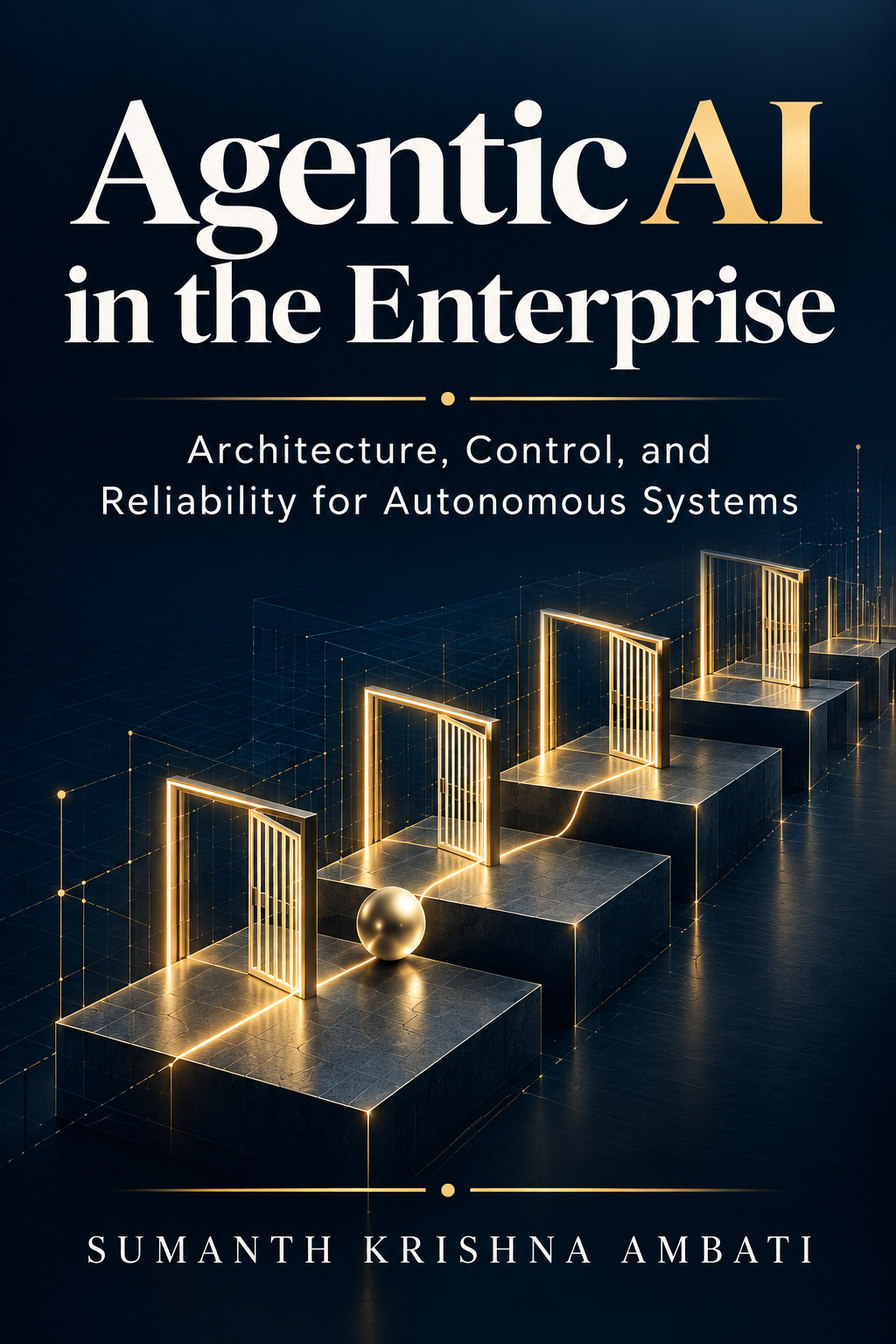
Agentic AI in the Enterprise
Architecture, Control, and Reliability for Autonomous Systems
Autonomy needs boundaries, approvals, and reliability—not just capable models.
From book to practice
Explore the instructor-led training for this topic.
Go deeper with guided architecture exercises, discussion and practical learning outcomes at the Enterprise AI Architecture Academy.
Explore related training ↗Inside the book
Why this book matters
Agentic AI introduces systems that can plan, invoke tools and take actions. This book examines the architectural decisions that make those capabilities useful without surrendering control. Explore how to define autonomy boundaries, design approval and escalation paths, and make agent behavior observable and dependable.
Who this is for
Enterprise architects, AI engineering teams, platform leaders and technical decision-makers exploring autonomous systems.
Questions worth exploring
What decisions does this book help you think through?
Question 2
How do we limit tool access, permissions and unintended actions?
Question 3
What does reliable operation look like when outcomes are not fully deterministic?
Perspectives to take into your work
- Frame agent autonomy as an architectural decision, not just a model setting.
- Consider permissions, human oversight and recovery paths together.
- Connect agent design to operational reliability and accountability.
These are editorial reading themes based on the book's subject, not a reproduced table of contents or a claim about specific chapters.
Continue your journey
One book opens the next question.
The four books explore complementary parts of enterprise AI architecture. Choose the next perspective that helps you make better decisions.